New Energy Trading Platform · Lead Product Designer · 1.5 years
Brazilian Energy Trading Exchange
BBCE is the leader in electronic trading in the energy market, responsible for 99% of the energy volume traded in Brazil. With 40 shareholders and over 200 active companies on the platform, it has established itself as the main trading environment in the national energy sector.
Problems and Objectives
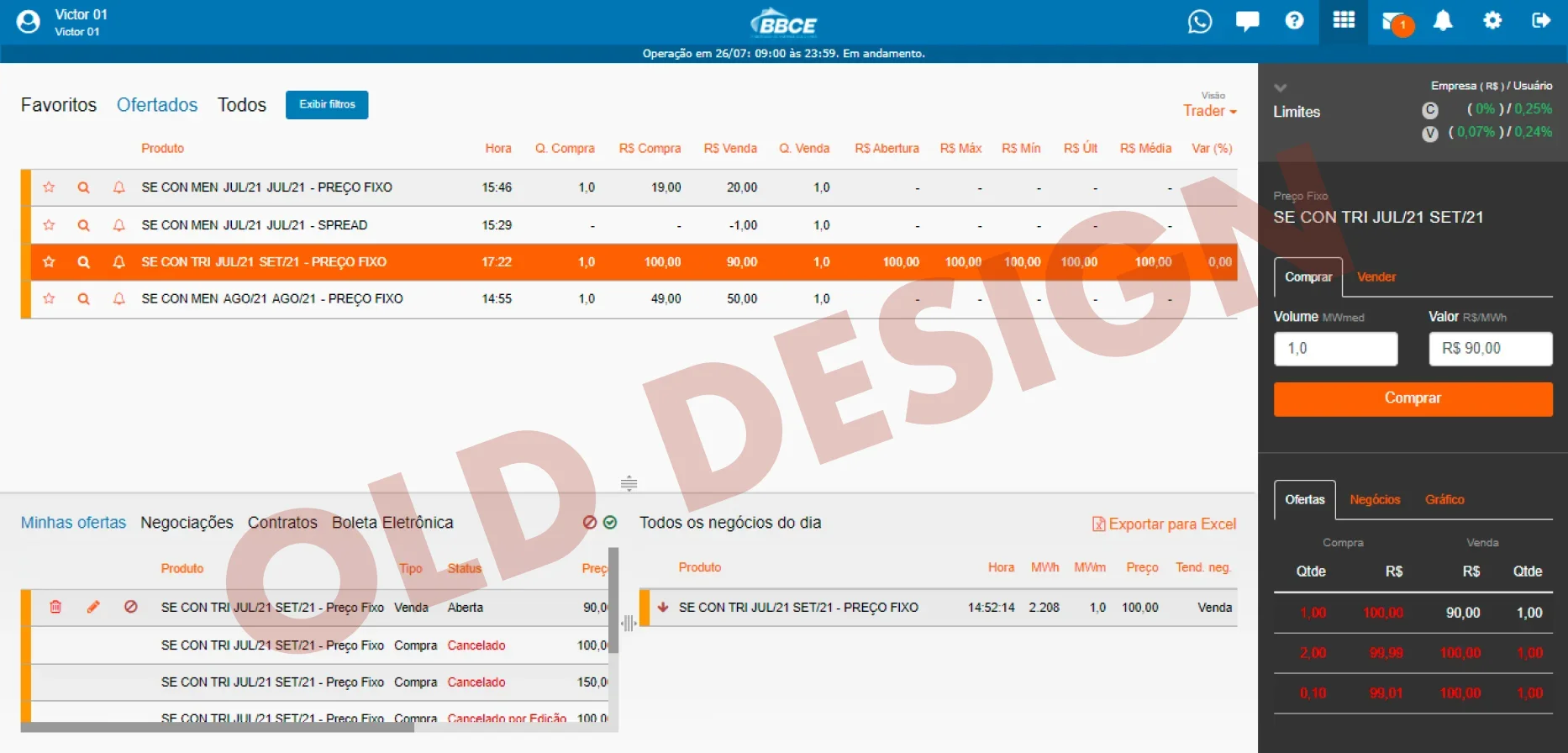
I took on as Lead Product Designer the project of completely replacing BBCE's legacy platform. The trigger was regulatory: entry into the CVM required a new product — the Energy Derivative — that the existing architecture couldn't support. But pressure also came from users: critical performance issues and compromised usability were already threatening business volume and trust in the product.
The Design Process
The challenge was to balance three forces: the regulatory complexity of the CVM, the operational demands of traders, and the ambition to scale trading volume. We started with qualitative and quantitative research, then went through Lean Inception to align the MVP and priorities with stakeholders, and iterated through prototyping and testing cycles until we reached a solution fast enough for the market and robust enough for regulation.
Quantitative Research
Data collected from 127 surveys
• 76% Poor performance
• 17% Bad usability
• 6% No dark mode
• 1% Other
• NPS 72
Qualitative Research
Interviews with 32 users
• Speed in trading
• Need for different interface layouts
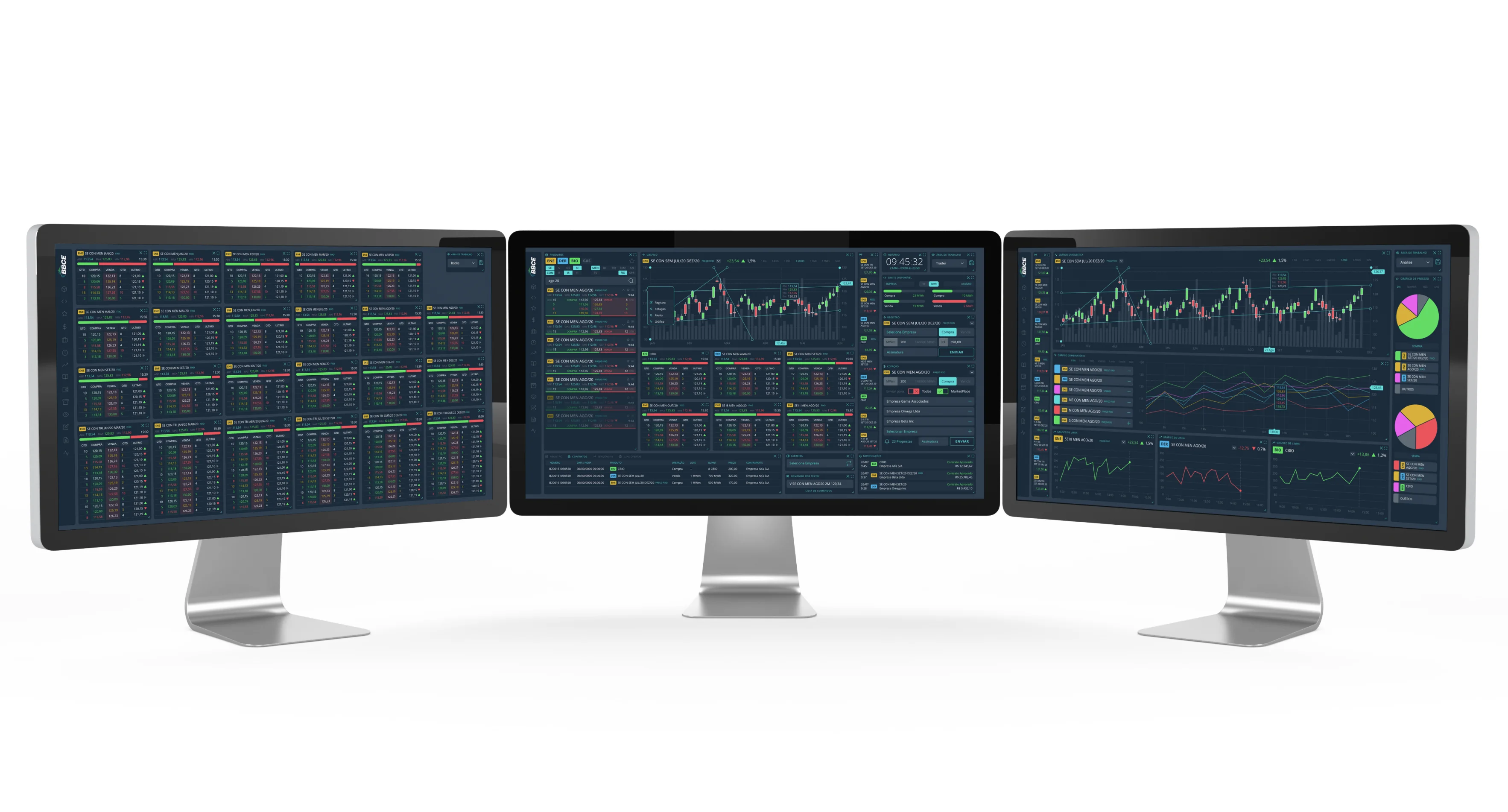
• Multiple monitor support
• Dark Mode
• Communication between traders
• Multiple portfolios
The Solution
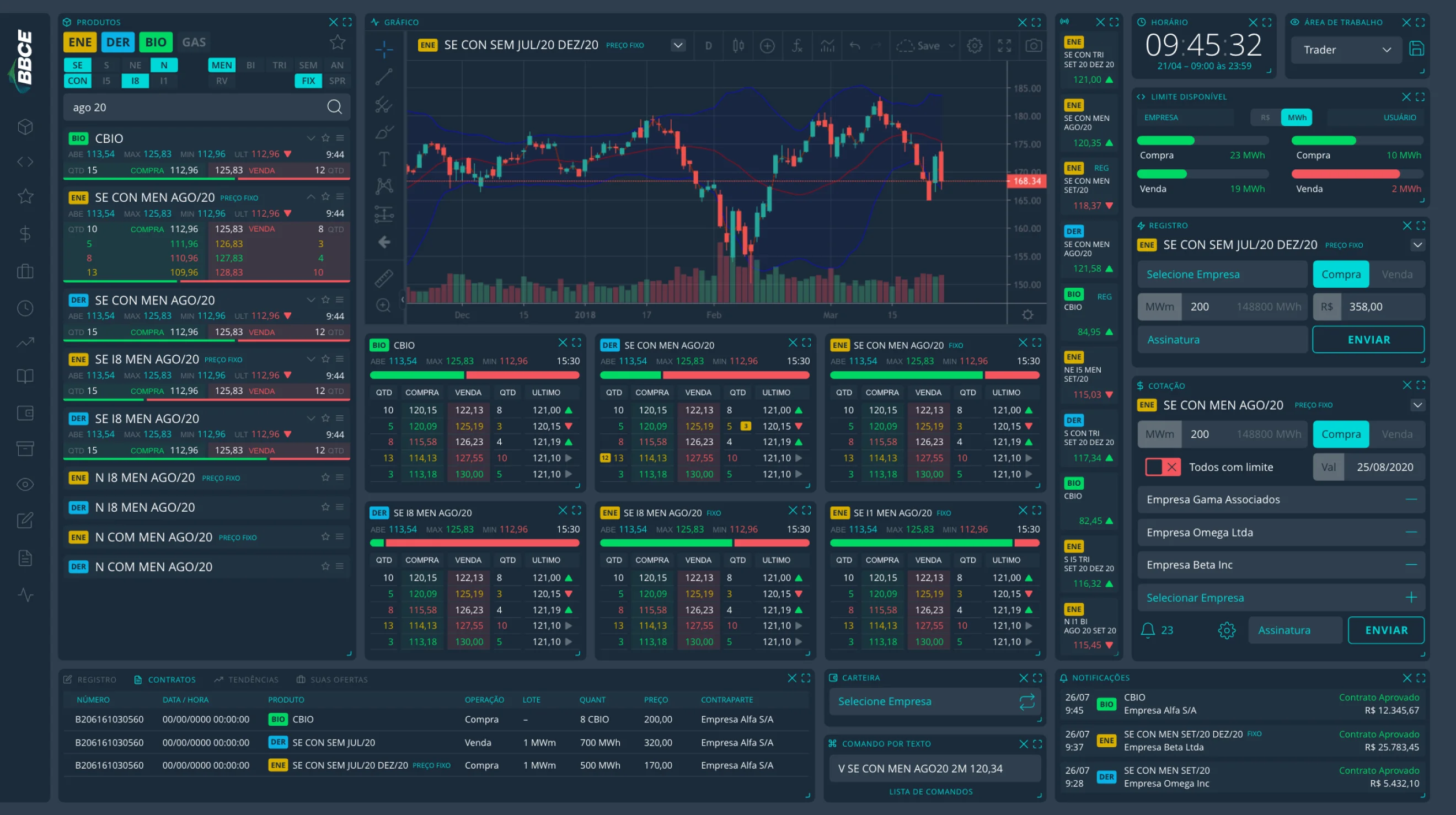
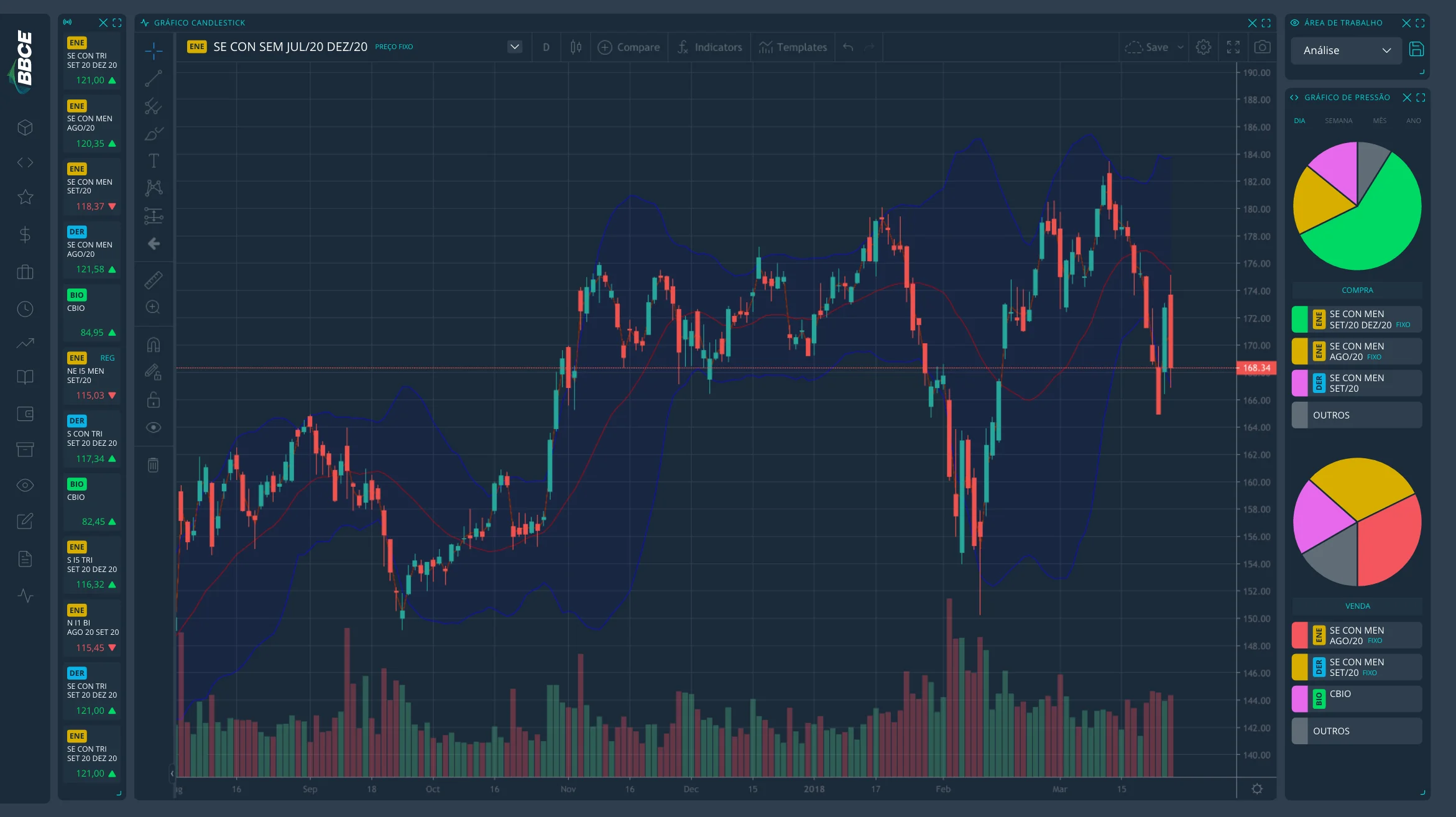
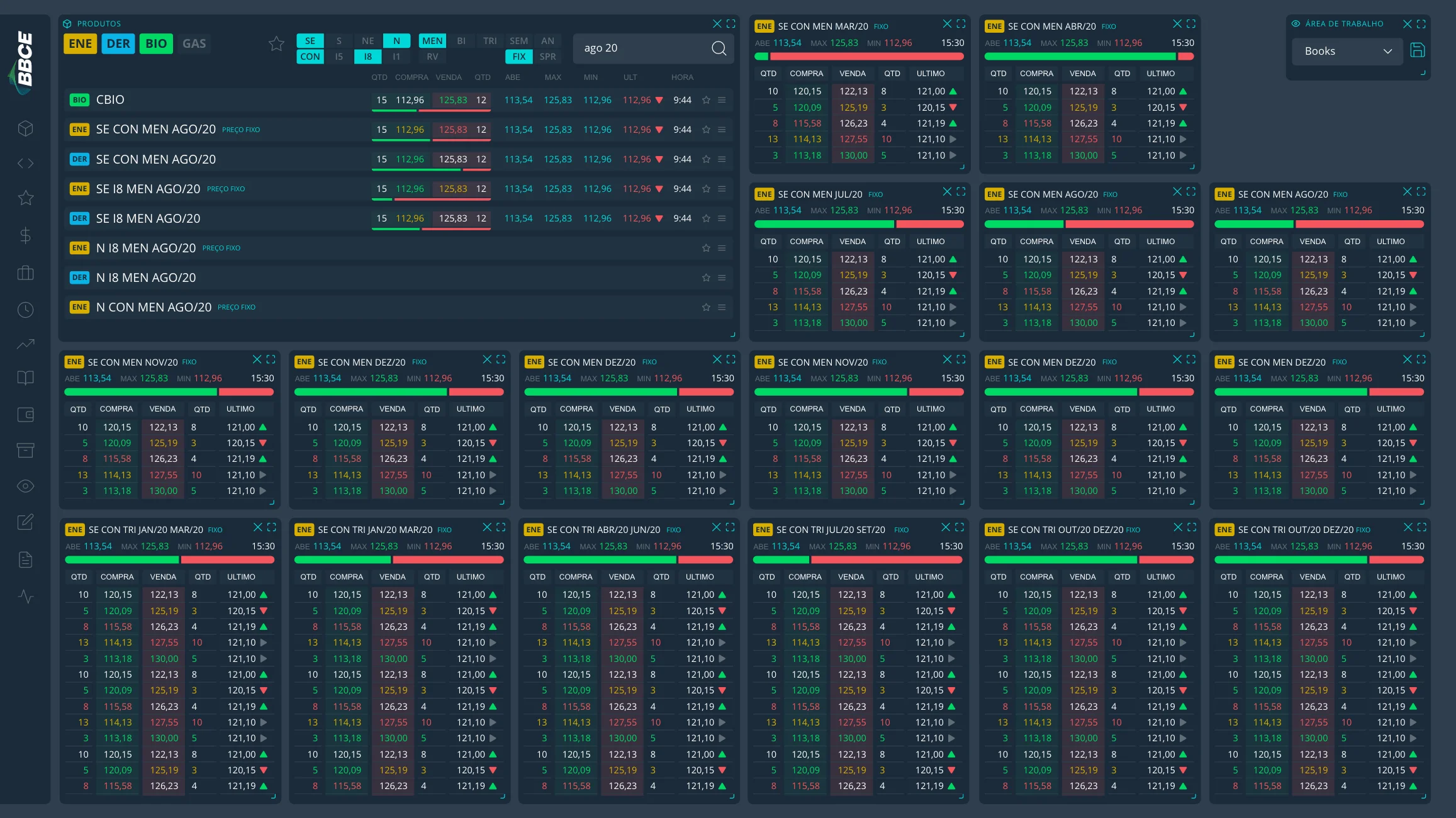
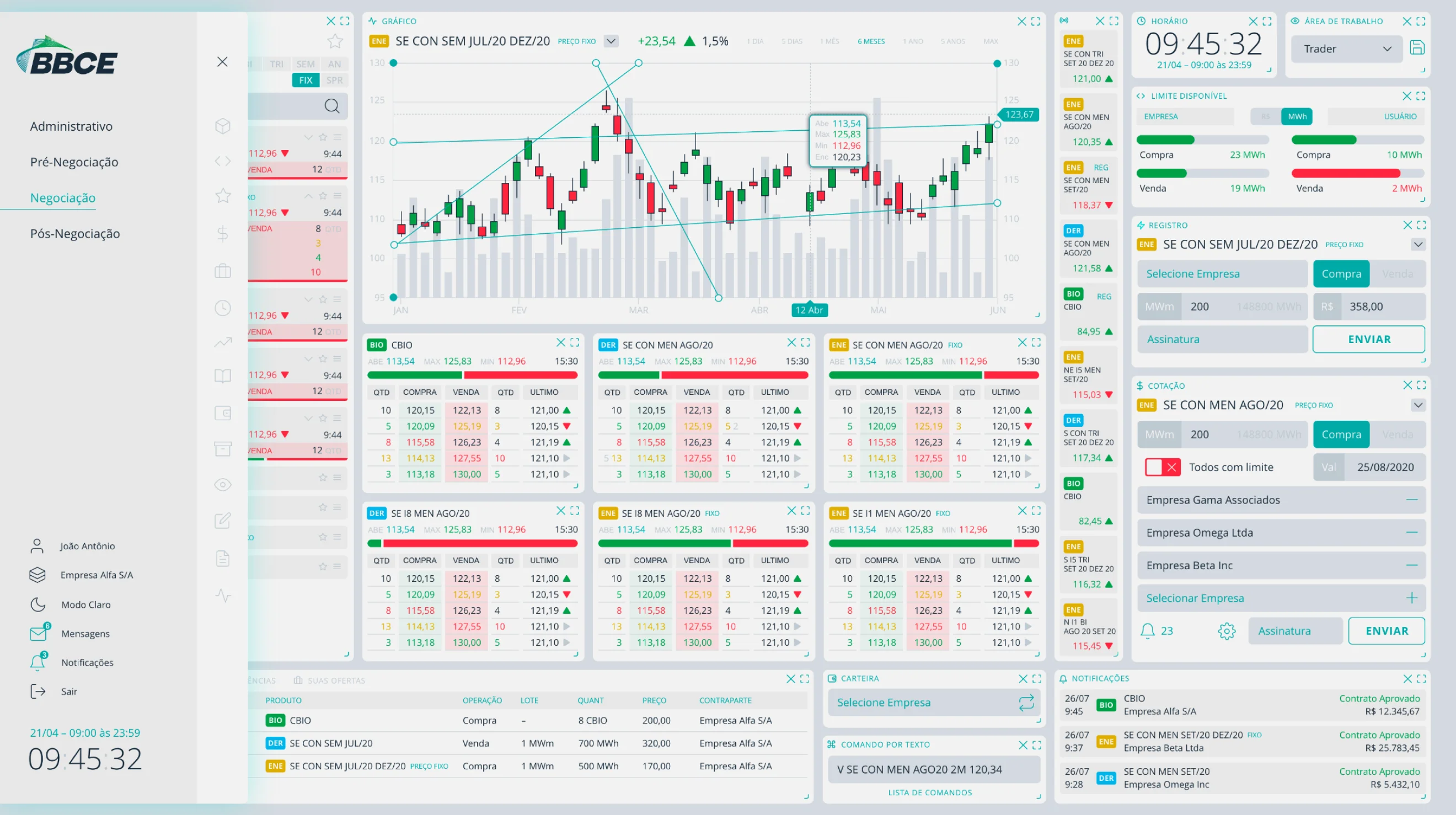
The platform was built from scratch, with every design decision traced back to a research insight. For performance, we prioritized a lightweight interface with on-demand loading. For high-frequency traders, we delivered native dark mode, support for multiple monitors and multiple simultaneous portfolios. For real-time communication, we built an integrated chat module. And for the CVM, a dedicated Energy Derivative module with compliance flows built in from the wireframe.
Trading volume on the platform jumped from R$ 5 billion to R$ 20 billion in less than a year.
The E-HUB launched after 1.5 years of development. As a complete rebuild, the main trade-off was running both platforms simultaneously during the transition — they operated in parallel for a few months to ensure operational continuity without disrupting trading. Even so, the impact was immediate: annual trading volume jumped from R$ 5 billion to R$ 20 billion in less than a year, and the platform began supporting the Energy Derivative, opening an entirely new market for BBCE.